Cart
0
You may also like
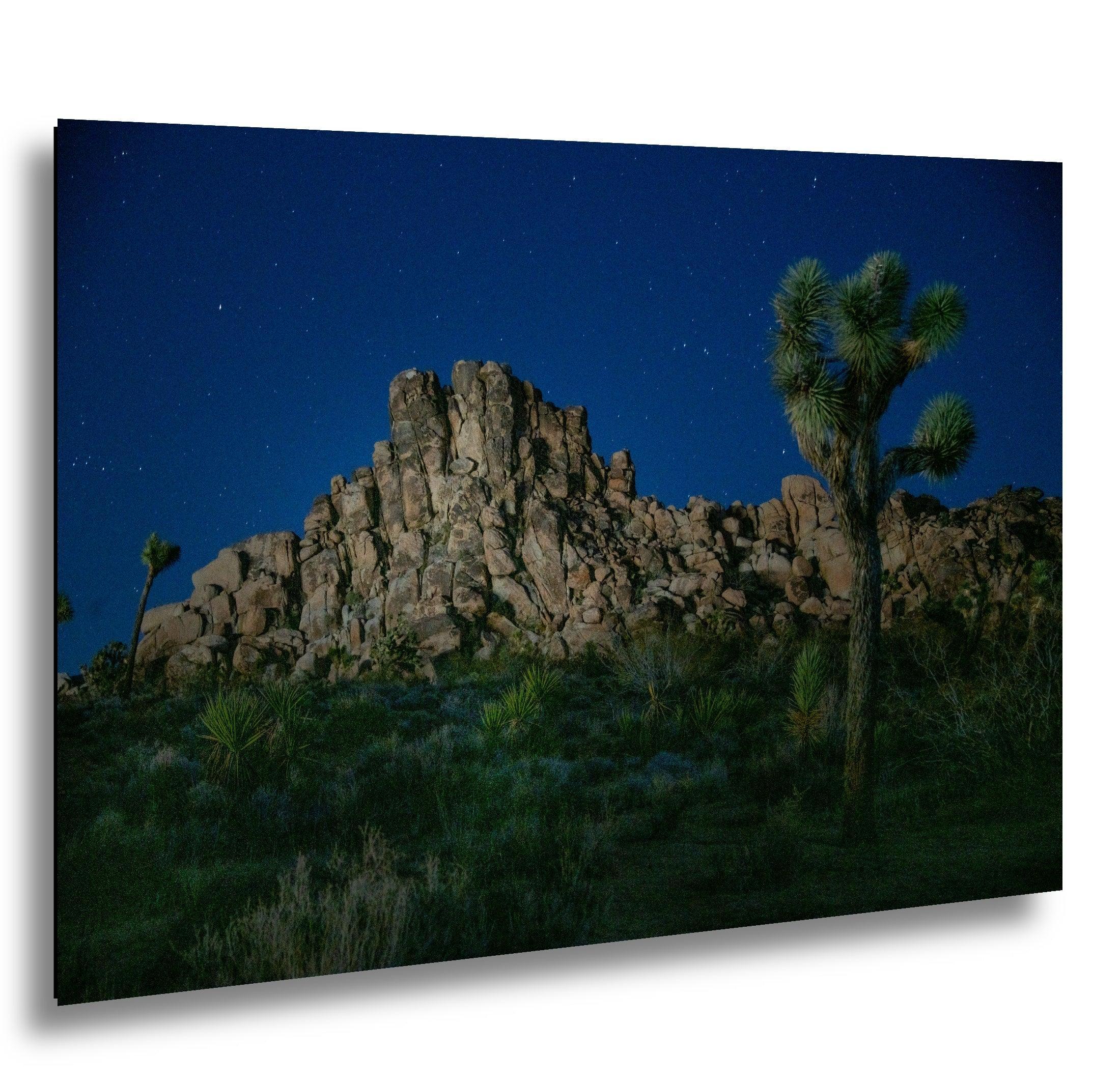


I didn’t go to Joshua Tree that day in search of something new. I went back to correct a failure. Some photographs from an earlier trip hadn’t turned out the way I’d hoped, and they lingered in my mind like unfinished sentences. I felt called to return—not out of confidence, but out of necessity. The desert has a way of asking you to try again.
Just after passing through the park entrance, I saw it. A striking rock formation rising from the sand, weathered and timeless, with a Joshua tree standing to the right as if keeping watch. The light was still high and harsh, but the composition stopped me cold. I knew instantly this was a place to return to. I took a mental note, almost a promise to myself: Come back at the end of the day. Sunset will tell a different story.
The hours passed slowly. I moved through the park, photographing, scouting, waiting. But that rock formation stayed with me, quietly calling me back. As the sun sank lower, doubt crept in. I wondered if I had built the moment up too much in my mind. Desert light is unpredictable, and timing is everything. Still, as evening approached, I turned the car around and headed back toward the entrance, drawn by that earlier promise.
On my way out of the park, I stopped and set up the shot. The rocks were exactly where I remembered them. The Joshua tree still stood firm, silhouetted against the fading sky. I waited. The sun slipped below the horizon, and with it went the warm glow I had hoped for. When I checked the scene, my heart sank—the light didn’t feel right. The foreground fell into shadow. The desert grew cold. I asked myself the question every photographer knows too well: Was it worth staying?
I almost packed up.
But I waited.
As darkness settled in, something unexpected happened. A soft glow began to rise from the land itself—light spilling in from distant cities far beyond the park, gently illuminating the rocks. Not enough to overpower the night, just enough to reveal texture and form. Above me, the sky transformed. Stars emerged one by one, then by the thousands, filling the darkness with quiet brilliance. The Joshua tree stood between worlds—rooted in earth, reaching toward the cosmos.
In that moment, the doubt dissolved. This was the photograph I hadn’t known I was waiting for.
I worked carefully, deliberately. The tripod felt anchored not just to the ground, but to time itself. The rocks, shaped over millions of years, now shared the frame with ancient starlight that had traveled unimaginable distances to reach my lens. The foreground glowed softly, the sky burned with stars, and the Joshua tree tied it all together—a symbol of endurance in an unforgiving landscape.
When I pressed the shutter, I felt a deep sense of arrival. Not triumph, but alignment. The failure that brought me back, the patience it demanded, the waiting through doubt and darkness—it all led to this single frame.
Later, reviewing the image, I knew the answer to the question I’d asked myself in the cold desert night. Yes, it was worth waiting. Worth returning. Worth trusting the process. This photograph is more than a scene from Joshua Tree National Park—it’s a reminder that the best moments often reveal themselves only after the light you expected is gone.
We offer five exceptional ways to print your images, each designed to suit your style and needs.
1) Premium Photo Paper
• High-quality, professional-grade photo prints with sharp, vivid, and rich colors.
• Feels like you’re right there in the scene.
• Long-lasting, durable prints available in sizes 8x10, 11x14, 16x20, and 24x36 inches.
• Designed to be placed in a glass frame, which you can purchase
separately (affordable options start at just a few dollars at Target or online).
2) Ready-to-Hang Canvas
• Convenient and ready to display right out of the box—no assembly required!
• Stunning, finished look with a polished aesthetic.
• Made with 0.75 or 1.5-inch wooden stretcher bars (depending on size) for a sturdy, professional feel, similar to traditional oil paintings.
• Sides are clean and free of staples or visible lines, ensuring a seamless appearance.
• Estimated total production and delivery time: 10 days.
3) Ready-to-Hang Canvas (Split into 3 Panels)
• Perfect for large statement pieces.
• The image is divided into three equally sized canvas panels, creating a modern, dynamic look.
• Ideal for showcasing spectacularly large artwork while adding depth and interest to your walls.
4) Aluminum Metal Prints
• Elegant and exclusive high-end aluminum prints that shine with a modern touch.
• 3/64” thick aluminum panels with a glossy finish and rounded edges for a sleek, polished look.
• UV-resistant ink protects against fading, ensuring long-lasting vibrancy.
• Ready to hang right out of the box for ultimate convenience.
5) Acrylic Prints
• Modern and eye-catching, these prints offer incredible vibrancy and depth.
• Made with 1/8” thick, museum-quality acrylic that refracts light beautifully, enhancing your image with brilliant color and clarity.
• UV-resistant ink ensures your photo stays stunning over time.
• Ready to hang immediately, with no extra setup required.
Choose the printing option that fits your style and bring your favorite images to life!
Free insured shipping is included for all US orders.
When we have received your order, you will automatically receive an e-mail confirming your order. Orders made before 2 PM (CET) will be picked, packed and shipped the same day. Delivery time is usually 2-4 working days with DHL Express.
If you want to change a product into another model, strap color etc., please contact us so we are able to reserve the new item in our stock immediately. You are always entitled to an exchange or refund within 30 days after you have received your package, as long as the item has not been used.


